Preface
The first path involves shortening the duration of its debt. The Treasury tilts new issuance toward bills and retires long bonds with buybacks. And the Federal reserve, despite the new chair’s hawkish tone, turns out to be a partner in this direction, it is shrinking the duration of its own balance sheet in lockstep with the Treasury's. The feud the press keeps reporting between Bessent and Warsh looks to us like a division of labor, not a war — one man takes the inflation narrative and restore Fed credibility, the other takes the long end and the funding arithmetic, and both produce the same byproduct: leverage the short end demand, riding the one corner of the market where demand is close to bottomless — banks, money funds, and the stablecoin complex are all starving for short, safe, liquid paper. Starving the long end can create a more favorable supply and demand dynamic, thus helping to cap the long end yield.
01
Path 1 – Shorten Duration
1
Two Sides
Start with what each side appears to want. Warsh's Fed has a funds rate at 3.50 to 3.75 percent against core inflation of 3.3 percent, and a market that priced a better-than-even chance of a hike at the September 15-16 meeting. His Jackson Hole address declined both forward guidance and a reaction function — a deliberate fog. He insists he is not convinced the underlying inflation trend has improved, even after a friendlier summer of prints. On any textbook reading, that is a hawk guarding the front end.
Bessent's Treasury, meanwhile, has doubled its long-end buyback program to at least USD 50 billion per quarter, funded in ways that retire long duration outright. He talks about yields that "don't reflect the underlying fundamentals" and hints at tools the market hasn't seen. On any textbook reading, that is a dove defending the long end.
There is a deeper logic binding them. The Fed wants a smaller balance sheet with a shorter maturity profile — Warsh has said the size and duration of the portfolio deserve review, and a task force under former Governor Jeremy Stein is working through the options. The Treasury wants cheaper average funding and a debt stock less hostage to term premium. A world where the Fed owns fewer long bonds and the Treasury issues fewer of them is a world both men have described, separately, as desirable. We do not think Kevin Warsh needs to be a vocal dove to help with government financing, on the contrary, a Fed that is seen as abandoning inflation principles loses credibility and may result in an even higher long end yield. We think Kevin Warsh is gaining market credibility to spend along the way – when his bigger move role out after his task forces completes the review.
2
The Duration Machine
The Treasury's half is the more visible one. Issuance has been drifting toward bills for over a year, and the August move — doubling quarterly long-end buybacks to at least USD 50 billion — crossed a line from liquidity management into activism. When the operation is funded from the Treasury General Account, as has been rumored, it amounts to a cash retirement of long duration: long bonds leave the market, and the replacement paper, when it comes, skews short. Bessent has all but confirmed the framing, dropping the phrase "Treasury twist" himself and noting he knows things the market doesn't. The next quarterly refunding announcement in early November will tell us how durable the tilt is; we expect the bills bias to survive contact with the deficit.
The Fed's half is quieter but further along than most investors appreciate. Three moves matter. First, since December 2025, all principal payments from the Fed's agency MBS holdings have been reinvested into Treasury bills. That is a slow-motion duration squeeze on the asset side: every month, mortgage paper with long effective duration rolls off and short paper replaces it. Second, the Reserve Management Purchases begun after late-2025 funding stress — monthly open-market purchases of bills — are described as plumbing, and in an accounting sense they are. But reserves buying new bills is reserves buying the exact paper the Treasury is about to issue in abundance. Call it what you like; it rhymes with monetization of the short end. Third, the October 2025 meeting minutes show the Committee already agreeing on the destination: a SOMA portfolio that mirrors the composition of the market — which, in a bills-heavy market, means a much shorter Fed book.
The numbers explain the urgency. Warsh told Congress in July that the average duration of the Fed's Treasury holdings is about six and a half years, against roughly four and a half years for the market's. A central bank holding longer paper than the private sector is, in his telling, an artifact of crisis-fighting that has outlived its crisis — and, quoting Volcker's language, policy operating "on the edge of its authority." The balance sheet, near USD 6.7 trillion after the end of quantitative tightening, is no longer growing. But its duration is now falling on two tracks at once: passive runoff of the long stuff, active accumulation of the short stuff.
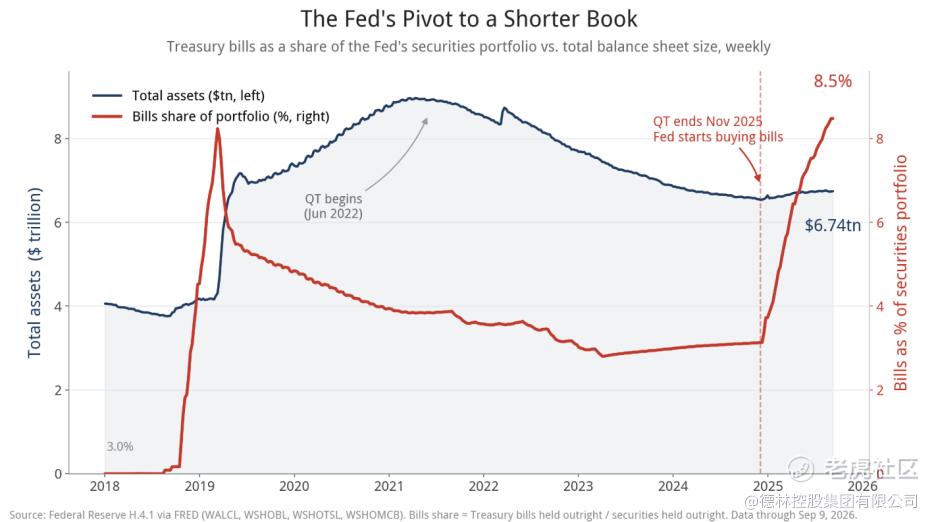
Figure 1:The Fed's Pivot to a Shorter Book, Source: DL Family Office
The demand side is what makes the machine plausible. Compared to long end, short-duration demand in the dollar system is, now, close to bottomless. Money-market funds hold $7.86 trillion — up more than $750 billion year-over-year — with Treasuries at 42% of their portfolios and rising 25% over twelve months. Weighted average maturity: about forty days. This is structural, regulatory, tax-driven demand for the front of the curve, and it reprices with every bill auction. Stablecoins add a genuinely new leg: mandated by statute into short Treasury paper, with the largest issuer alone holding on the order of $190 billion in bills. Foreign official accounts, even while trimming their coupon books, have been increasing their bill allocations. And the Fed itself, through its bill reinvestment and RMPs, has rejoined the queue despite threatening to cut balance sheet.
A wild card here is the bank liquidity regulation. The eSLR final rule, effective April 1 this year, cut the leverage requirement on the deposit-taking subsidiaries of the largest banks from 6% to a 4% cap, and recalibrated the holding-company requirement — releasing on the order of $13 billion of capital at the holding companies and $219 billion, a 28% reduction, at the subsidiary level. What is coming: liquidity regulation itself. In March, Bessent publicly demanded that liquidity rules recognize borrowing capacity at the discount window against pre-positioned collateral; Vice Chair for Supervision Bowman echoed him the same day. Former Governor Miran has published the menu: recognize discount-window capacity in the LCR numerator, capped at 20 percent of HQLA, and by his own arithmetic free up something between USD 500 billion and USD 1 trillion of idle cash across the banking system. The formal proposal is shaping up for early 2027, after the Fed's balance-sheet task force reports in December. Here is where the "private QE" narrative takes flight, and where we apply the brakes. The bull case says: freed liquidity and relaxed leverage rules let banks absorb Treasuries at scale — a standing private-sector bid for government paper that substitutes for the Fed's balance sheet. It is a seductive story, and we think this remain a “if” despite there being rooms for further development.
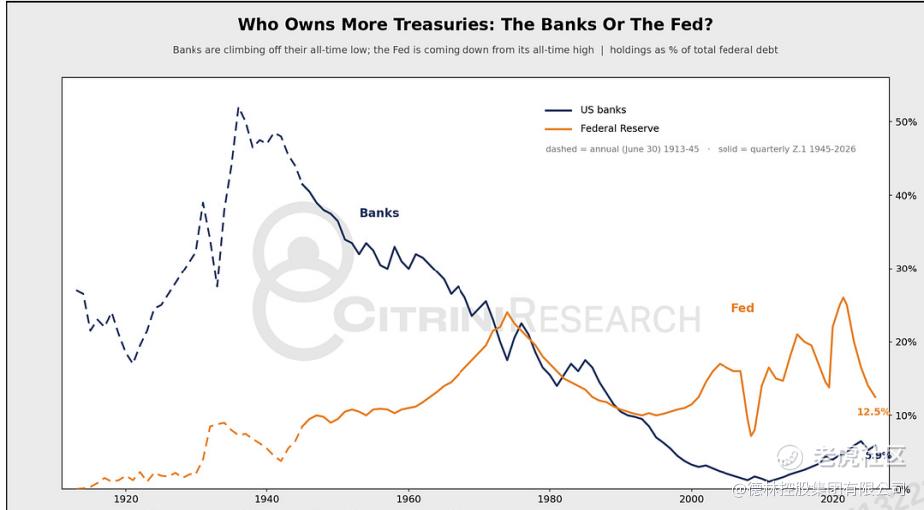
Figure 2:Who Owns More Treasuries: The Banks Or The Fed?, Source:Citrini Research, DL Family Office
Put the halves together and the machine is: Treasury sells bills; Fed buys bills; private sector buys bills. Long coupons become scarcer — retired by buybacks, never replaced by the Fed's reinvestment. The market's float of duration shrinks even as the debt stock grows. This is supply-side yield curve management, and it is already running.
3
The Limits
Path one needs stress-testing, because our base case includes failure at the margin — and because the limits of this path are precisely what set the price of path two.
First, we think Bessent economy is on a right direction but not a right scale to achieve his agenda. A buyback program of USD 50 billion a quarter — USD 200 billion a year — is real money, but against a government that borrows in the trillions it is a rounding error of duration, not a substitute for QE. And we also see Bessent conduct the buyback in a conservative manor in the September 10th buyback.
And the Fed's side of the bargain has its own cost. A chair who refuses guidance, shrinks the balance sheet, and re-privatizes the pricing of inflation risk is a chair who is rebuilding the term premium the post-2008 Fed spent fifteen years compressing. Every step toward a Greenspan-era opacity is a step toward a steeper curve. The two halves of the machine therefore fight each other at the margin: Treasury pulls the long end down; Fed policy philosophy pushes it up.
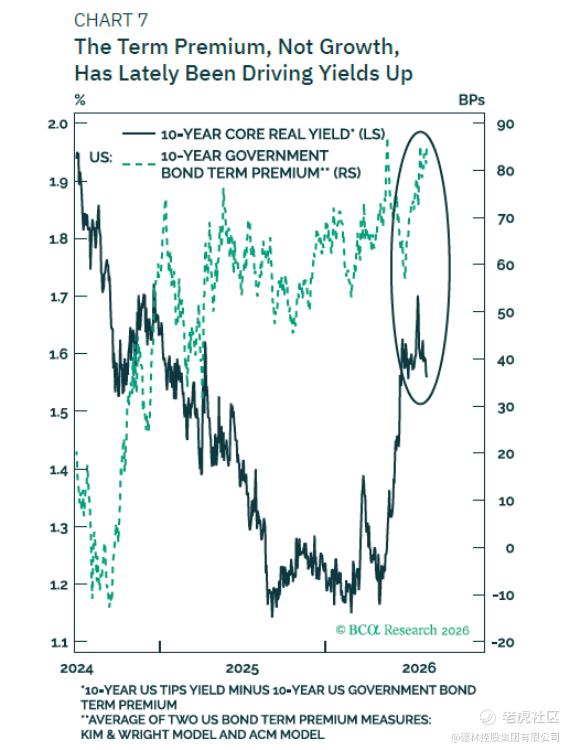
Figure 3:The Term Premium, Not Growth, Has Lately Been Driving Yields Up, Source:BCA Research, DL Family Office
So, if the duration squeeze disappoints, we expect to see a deeper version of what the curve is already doing: bear steepening until term premium is large enough to summon the private buyer the Fed refuses to be. The market's instinct to fade every long-bond rally this year is, in our view, well-founded, long-end supply-and-demand may be managed, but it is not solved. We also position our portfolio accordingly and have been maintaining a neutral duration stance for the past 2 years.
Moreover, even with the shortened strategy work, we still face another uncertainty. If rate hiking is what it takes to restore market confidence for the Fed, that can be extra burden on Mr. Bessent. Roughly $7 trillion bills roll within twelve months. Every 25 basis points the Fed hikes raise the cost of the very stock of debt this whole strategy is expanding. The government has swapped term-premium risk for refinancing risk.
精彩评论